
Bat Survey Season 2026 - What You Need to Know Before Building
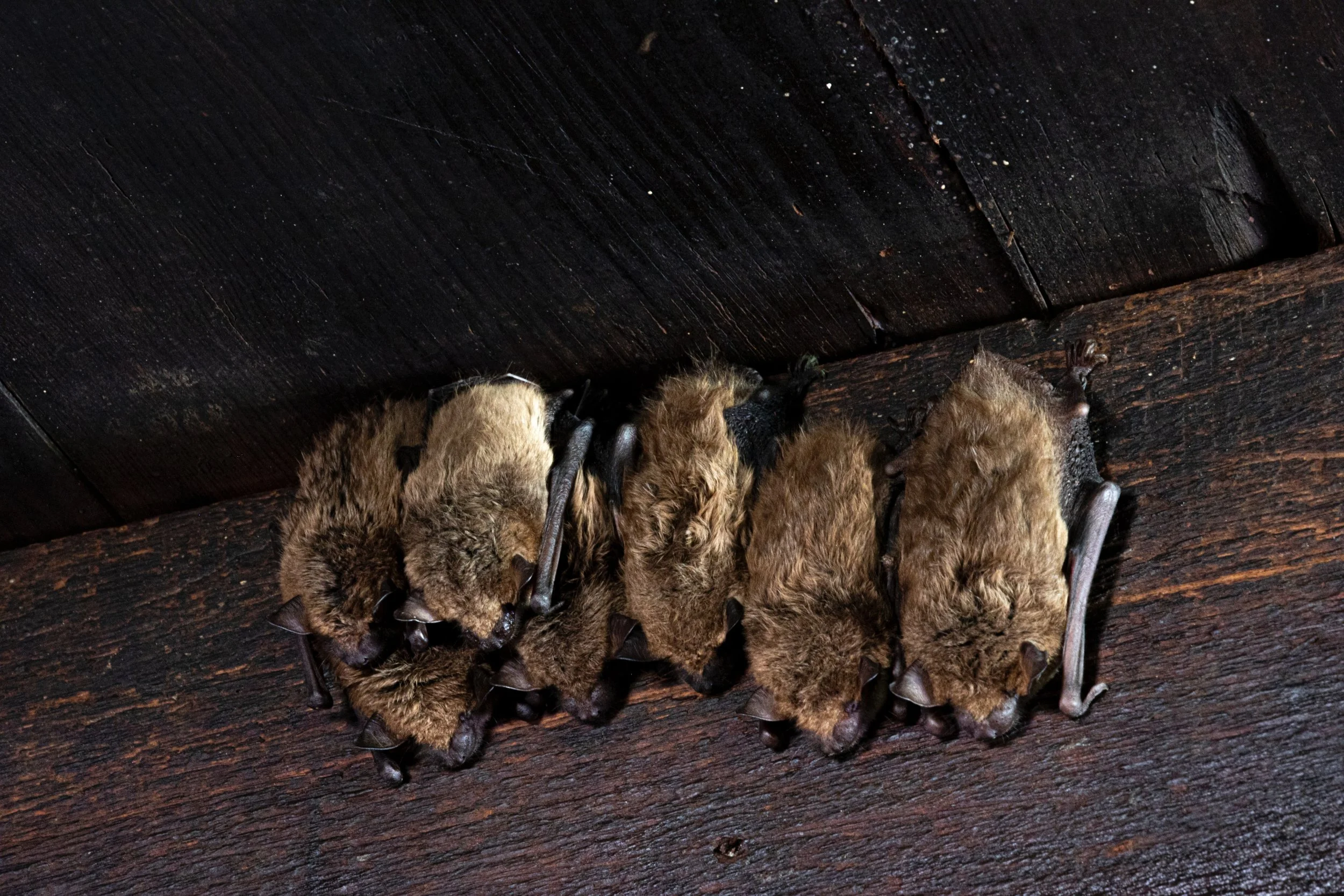
Planning a development can involve a wide range of ecological considerations, but bats are often one of the most significant. Because all bat species and their roosts are legally protected, the presence of suitable habitat or roosting features can affect project timelines, survey requirements and site design.
As bat survey season gets underway in 2026, understanding what may be required before work begins can help avoid delays later in the planning process.
Why Are Bats Important in Planning?
All bat species in the UK are protected under wildlife legislation. Protection extends not only to the bats themselves, but also to the places they use for shelter and breeding.
This means it is an offence to deliberately capture, injure or kill a bat, or to damage, destroy or obstruct access to a roost, even when bats are not present at the time.
For developers and landowners, the key consideration is whether a proposed development could affect bats or their roosting habitat. If there is potential for impacts, surveys may be required to inform planning decisions and identify appropriate mitigation measures.
When Might You Need a Bat Survey?
Not every development requires bat surveys, but they are commonly needed where buildings, structures or trees with bat roost potential are likely to be affected.
Examples include:
Demolition or conversion of buildings
Roof repairs or extensions
Barn conversions
Removal of mature trees
Works affecting bridges, culverts or other structures
Development adjacent to woodland, watercourses or well-connected hedgerow networks
The requirement for surveys is usually identified during a Preliminary Ecological Appraisal (PEA) or through a specific bat roost assessment.
Understanding Bat Survey Season
Bat surveys are seasonal because they rely on observing bat activity when bats are active.
The main bat survey season typically runs from May to September, with the optimal period for emergence and re-entry surveys generally falling between May and August. Where hibernating bats are a consideration — for example in underground structures such as caves, cellars or tunnels — surveys are typically undertaken between November and March, when bats are likely to be present at hibernation sites.
Different survey types can be undertaken at different times of year. Preliminary Roost Assessments, which involve inspecting buildings or trees for evidence of bats and assessing their suitability, can usually be completed year-round. However, if evidence of bats is found, or if a structure has suitable roosting features, emergence and re-entry surveys during the active season may be required.
Because survey windows are limited, identifying potential requirements early is often one of the most effective ways to avoid delays to a project programme.
What Happens During a Bat Survey?
The type of survey depends on the site and the level of bat roost potential identified.
Preliminary Roost Assessment
This is often the first stage of the process. An ecologist will inspect a building, structure or tree for features that could support bats, and assess the suitability of those features for roosting. The Bat Conservation Trust (BCT) guidance categorises roost potential on a four-point scale:
Negligible - the structure has no features capable of supporting roosting bats, or any features present are of insufficient quality to be used
Low - features are present that could support roosting bats, but their extent or quality makes use unlikely
Moderate - features are present that are capable of supporting roosting bats, and use is considered plausible
High - features are present that are well-suited to roosting bats, and use is considered likely
Evidence of use by bats - such as droppings, urine staining, feeding remains or direct observations - may also be recorded. The assessment determines whether further surveys are required. Structures assessed as negligible typically require no further survey work; those assessed as low, moderate or high may require follow-up emergence and re-entry surveys.
Bat Activity Surveys
Where suitable roosting features are present, surveyors may undertake emergence and re-entry surveys. These surveys are carried out around sunset or sunrise using a combination of visual observations — supported by night vision cameras — and bat detectors that record echolocation calls. The aim is to determine whether bats are using the structure, identify species where possible and understand how the roost is being used. Multiple survey visits are often required, depending on the suitability of the structure.
Activity and Transect Surveys
For larger sites, particularly those affecting habitats used by commuting or foraging bats, additional activity surveys may be required. These surveys help assess how bats use the wider landscape and whether development proposals could affect important flight routes or feeding areas through habitat fragmentation or disturbance.
What Happens If Bats Are Found?
Finding bats on a site does not necessarily prevent development from proceeding. In many cases, projects can move forward through a combination of sensitive design, mitigation and, where required, licensing through Natural England.
Mitigation measures might include:
Retaining roost features where possible
Creating replacement roosting opportunities
Installing bat boxes or integrated features like bat access tiles or tubes
Timing works to avoid sensitive periods
Maintaining commuting routes through habitat retention and native planting
The specific approach will depend on the species present, the type and number of roosts, and the scale of the proposed impacts.
Why Early Surveys Matter
One of the most common causes of planning delays is discovering the need for bat surveys after designs have already been finalised or planning submission dates have been set. Because activity and emergence surveys are seasonally constrained, missing the survey window can sometimes delay projects by several months.
Early ecological input allows potential issues to be identified before they become programme constraints, giving developers greater flexibility to incorporate mitigation into site design and planning submissions.
Common Questions from Developers and Landowners
Can I carry out works if bats are not currently present?
Not necessarily. Bat roosts remain protected even when bats are temporarily absent, so the potential impact on the roost feature itself must still be considered.
How long do bat surveys take?
Preliminary assessments can usually be completed quickly, but activity surveys often require multiple visits spread across the survey season. The overall timescale depends on the complexity of the site and the level of survey effort required.
Will bats stop my development?
In most cases, no. The purpose of surveys is to understand potential impacts and identify appropriate mitigation. Many developments proceed successfully where bats are present.
When should I contact an ecologist?
As early as possible. Engaging an ecologist during the initial planning stages provides the greatest opportunity to identify constraints, complete any necessary surveys within the appropriate season and avoid unnecessary delays.
Key Takeaways for Developers
Plan Early
Bat surveys are often seasonally constrained, making early engagement particularly important.
Understand the Risk
Buildings, mature trees and well-connected habitats can all increase the likelihood of survey requirements.
Surveys Support Planning
The purpose of bat surveys is to inform decision-making and ensure legal compliance, not to prevent development.
Design Can Make a Difference
Incorporating mitigation into project design at an early stage is often more effective and cost-efficient than making changes later.
As the 2026 survey season progresses, developers who understand potential ecological requirements early are generally best placed to keep projects moving smoothly through planning and into construction.
If you're planning works that could affect buildings, trees or habitats used by bats, we'd be happy to discuss what surveys may be required and how ecological considerations can be integrated into your project from the outset. Get in touch using the button below.