
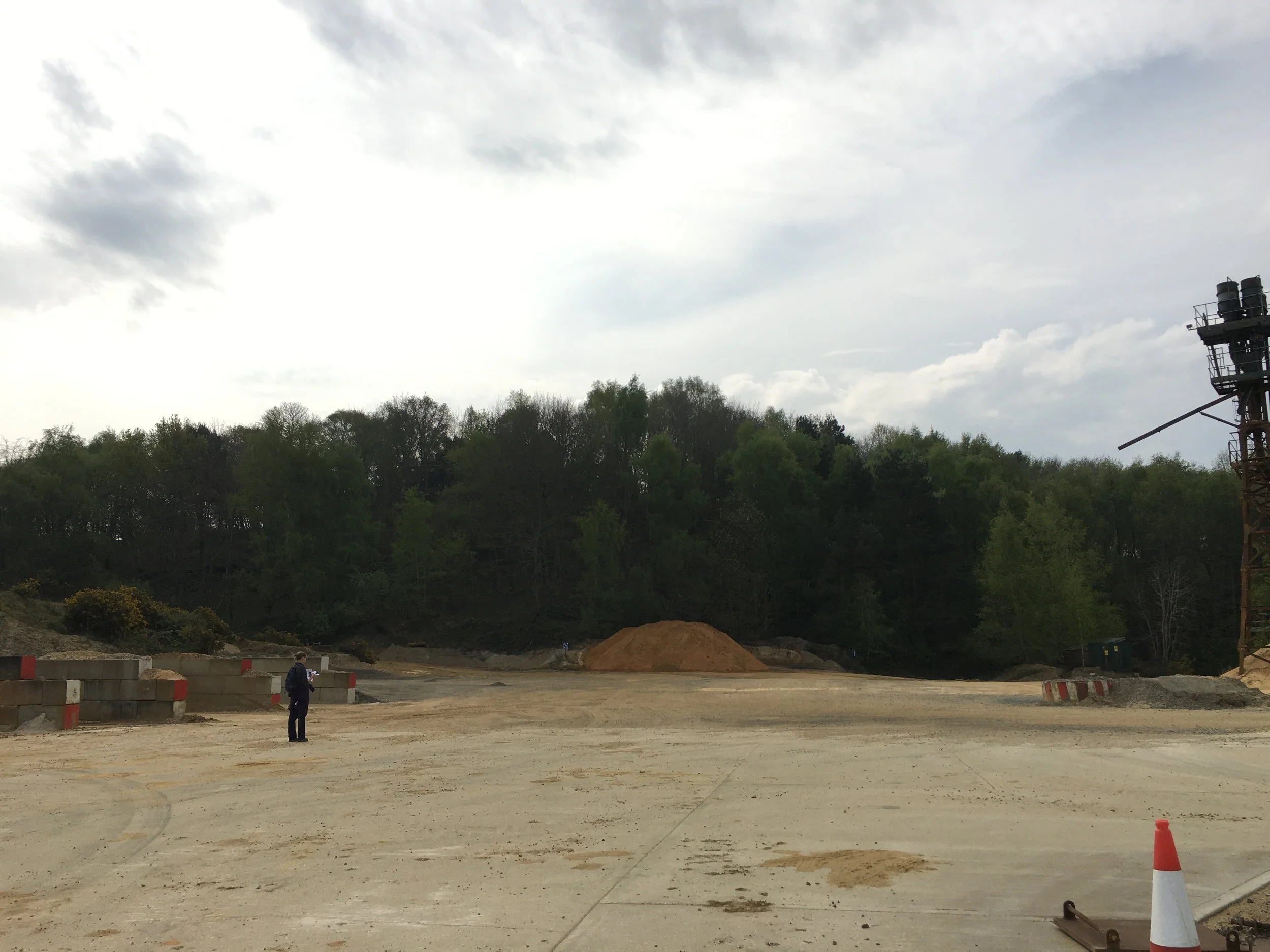
Rock Common Quarry
-
Quarry & Mining
-
Dudman Limited
-
Washington, West Sussex
-
Preliminary Ecological Appraisal (Pea) & Bat Scoping Assessment
Detailed Botanical Assessment
Environmental DNA (eDNA) survey for Great Crested Newts (GCN)
Badger Walkover Survey
Breeding Bird Surveys
Bat Nighttime Walkovers and Static Logger Deployments
Bat Emergence Surveys
Reptile Presence/Likely Absence Survey
Dormouse Presence/Likely Absence Survey
Invertebrate Assessment
Client brief
The Dudman Group specialise in the supply of primary, secondary and recycled aggregates. The Ecology Co-op assisted them with a project at a site they manage called Rock Common Quarry in West Sussex - a 33.5ha site that has been in operation since the 1920s and is subject to several planning permissions since the 1950s.
At the time, the site was operating under a 2004 permission that was due to expire, requiring a review of the old mining permissions. This involved redeveloping the approved restoration scheme, which had proposed a single large, deep-water body. Recent evidence indicated that this proposal was no linger safe or viable, due to significant health and safety hazards and complex issues relating to groundwater interaction with an adjacent landfill site.
We provided ecological expertise and completed the assessments necessary to support a new planning application. This application sought permission to infill the quarry pit and create a largely dry restored landform, incorporating habitats of ecological value to encourage biodiversity, alongside providing amenity use for recreational activities and smaller, shallower pools that would be of greater value for aquatic invertebrates.
Solution we delivered
The Ecology Co-op provided an Ecological Impact Appraisal (EcIA), assessing the importance of the site for all protected species and habitats, the significance of impacts resulting from the proposal, and the mitigation measures required.
This was informed by a suite of ecological surveys identified as necessary following an initial Preliminary Ecological Appraisal (PEA) and Bat Scoping Assessment, which is the first step for any development project. Surveys undertaken in 2020 included badger, breeding bird, bat (night-time walkover, static logger deployments and emergence), Great Crested Newts (GCN) (Habitat Suitability Index (HSI) and environmental DNA (eDNA), reptile, dormouse, invertebrate and botanical surveys.
We drew on the wide-ranging expertise of our ecology team, utilising individual specialisms to obtain detailed results that enabled us to provide accurate advice to our client, inform impact assessments and design appropriate mitigation measures.
The site revealed several notable findings, including the presence of peregrine falcon and kingfisher, a breeding colony of sand martins, a rich and diverse terrestrial invertebrate assemblage, a population of invasive non-native marsh frogs, as well as reptiles (slow worms and grass snakes) and common dormouse.
Mitigation measures tailored to the proposed restoration scheme were prescribed, providing assurances that protected and notable species and habitats would either be safeguarded during the establishment phase or supported through the creation of replacement habitats and features. These measures were designed to secure positive impacts for biodiversity wherever possible, and to minimise any potential negative effects.
Project outcomes
The project gained consent in February 2025 and the future progression of this project offers an exciting opportunity as a case study for sustainable restoration opportunities for other quarries in the future.