
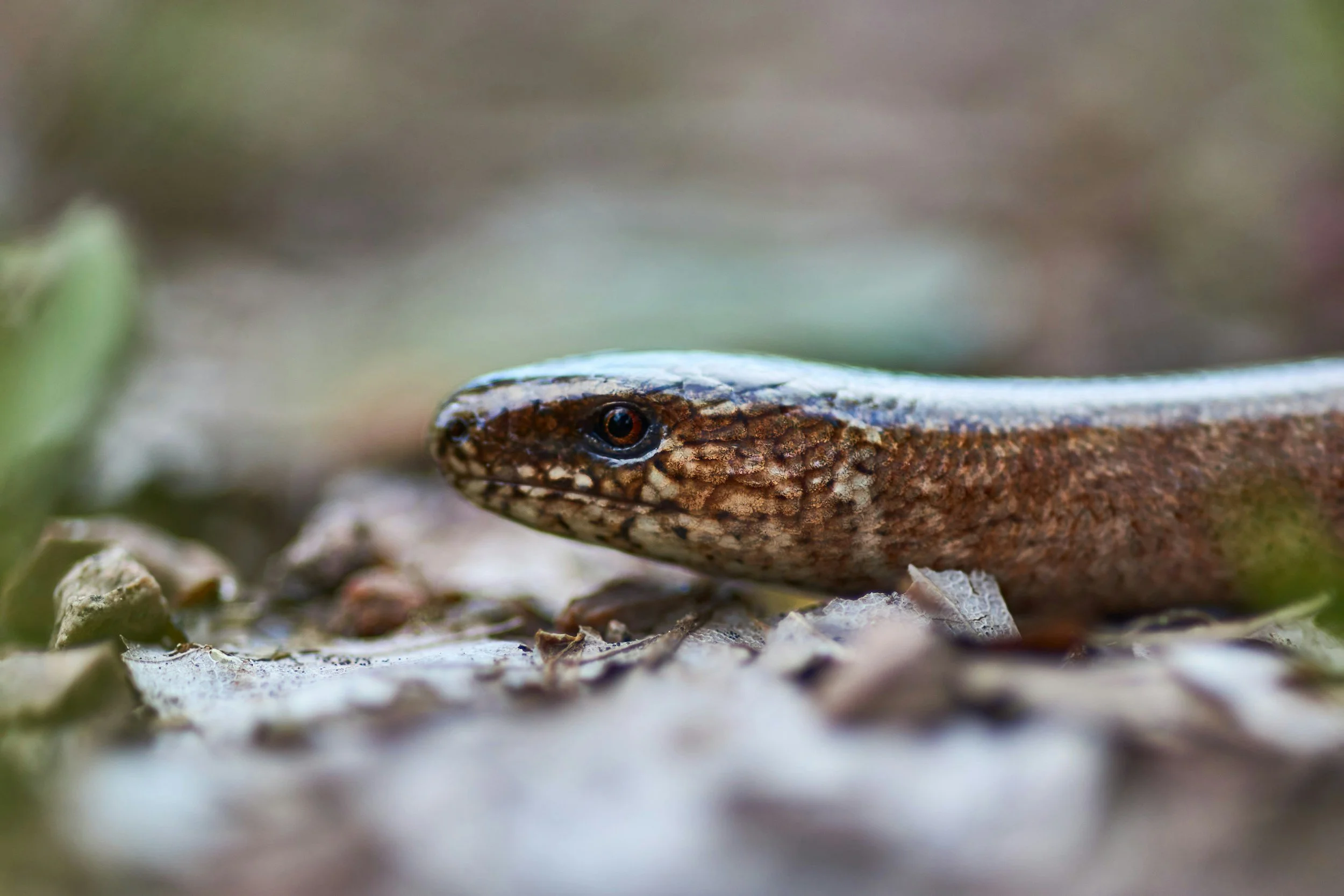
Slow Worms
Slow Worm
Anguis fragilis
Slow worms are legless lizards common across much of the UK, often mistaken for snakes due to their elongated, smooth-bodied appearance. Typically brown, bronze or grey, with a glossy sheen and a faint dorsal stripe in some individuals, they have small, indistinct heads and ear openings that distinguish them from snakes. Secretive and preferring cool, sheltered habitats such as grassland edges, hedgerows, compost heaps and rubble piles, they feed mainly on slugs, snails, earthworms and other soft-bodied invertebrates.
The slow worm (Anguis fragilis) is a widespread legless lizard across much of the UK, commonly found in grassland, heathland, woodland edges, hedgerows, gardens and brownfield sites, with higher densities in southern and lowland regions and sparser populations in parts of northern Scotland; they favour cool, sheltered microhabitats such as tussocky vegetation, compost heaps, log piles and stone walls where they can bask, hide and overwinter.
Slow worms are carnivorous, feeding mainly on slugs, snails, earthworms and other soft-bodied invertebrates, and are largely secretive and crepuscular to nocturnal in habit, often spending long periods hidden underground or under cover to avoid predation and desiccation.
Slow worms are protected under UK wildlife legislation and are vulnerable to habitat loss and fragmentation, a reptile survey may be required for development or land‑use change; identifying occupied sites, hibernation areas and population size informs mitigation measures such as translocation, fencing, habitat retention or timing of works to prevent legal offences and minimise ecological impacts.
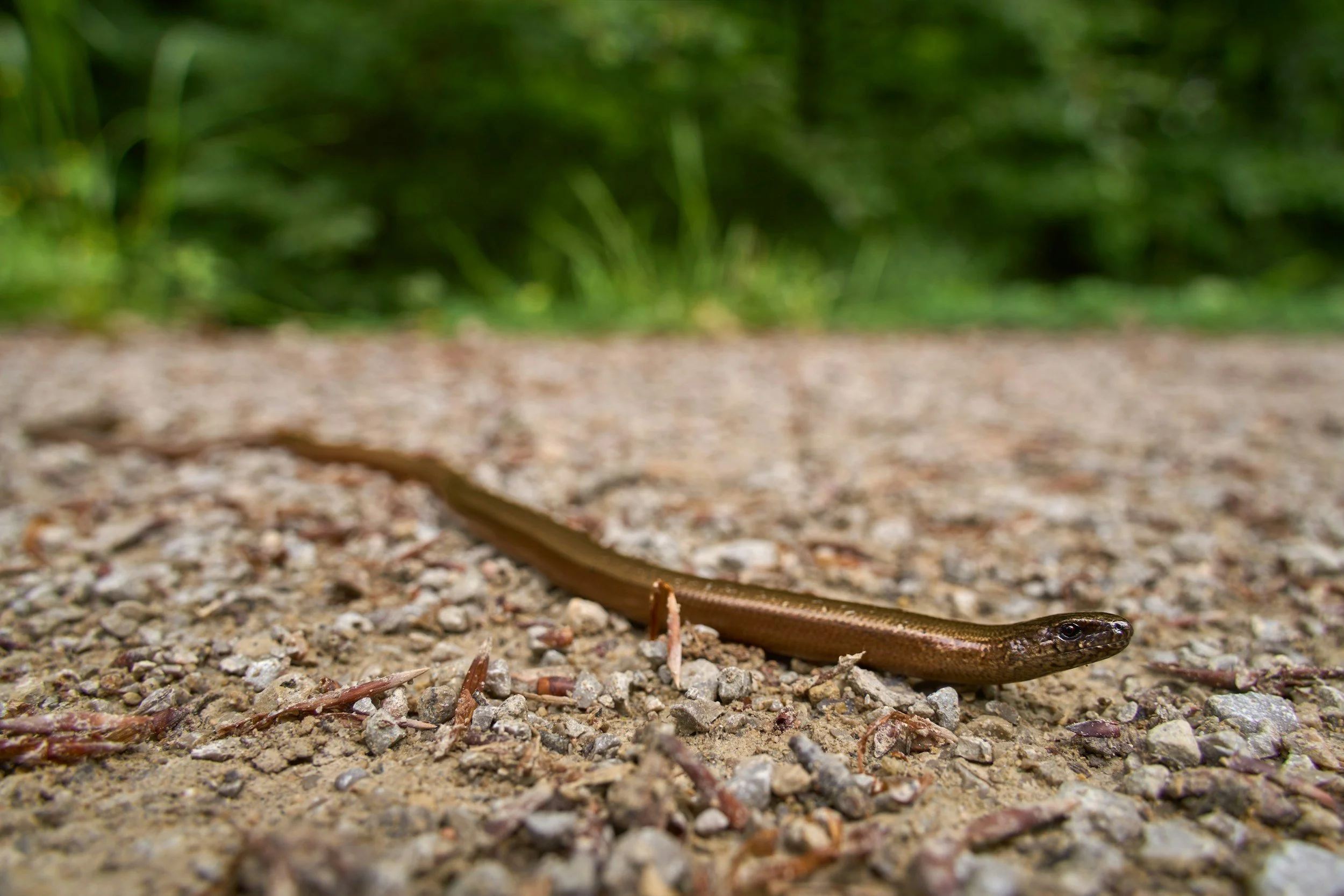
When might I need a Reptile Survey?
A reptile survey is needed when planned works could disturb reptiles, their refugia or movement corridors which commonly includes any development or land‑use change affecting grassland, heathland, scrub, hedgerows, railway embankments, allotments, brownfield sites, pasture or gardens; activities that involve clearance of vegetation, earthworks, construction, drainage, turf stripping, demolition or removal of piles of rubble and landscaping; and where planning authorities or ecological consultants identify records or suitable habitat within or adjacent to a site.
Slow worms (Anguis fragilis) are frequently encountered in such habitats and should be specifically considered when assessing risk. Under UK guidance reptiles are protected from intentional killing and certain methods of capture or disturbance, so surveys are required early in the project lifecycle - typically during pre‑application ecological appraisal or prior to demolition, habitat clearance and groundworks - to determine species presence, distribution and population status and to inform mitigation, timing constraints or the need for a licence from Natural England (or the relevant statutory nature conservation body).
Explore other protected species
Learn about other protected species including bats, birds, reptiles and more.