
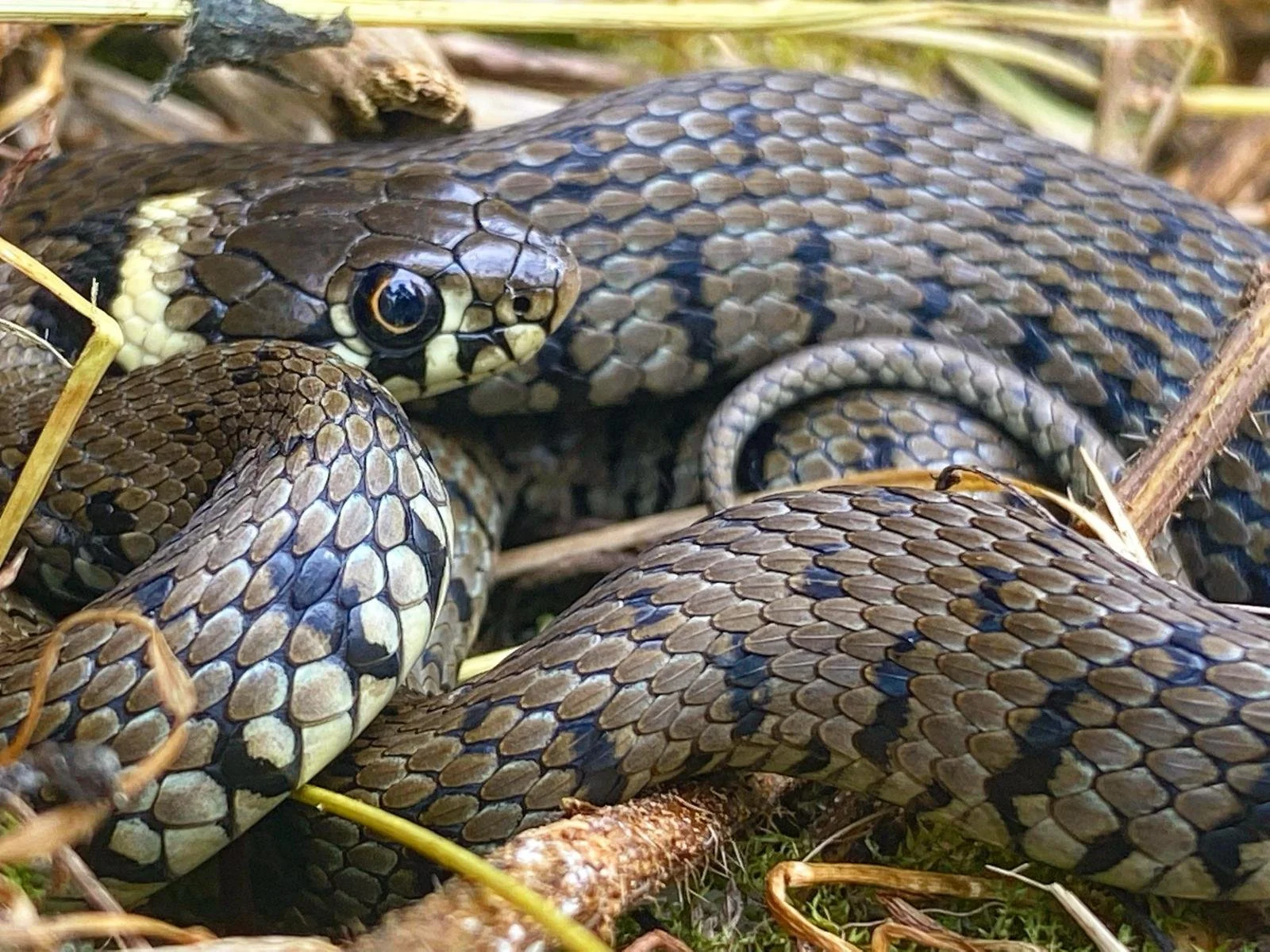
Adder
Adder
Vipera berus
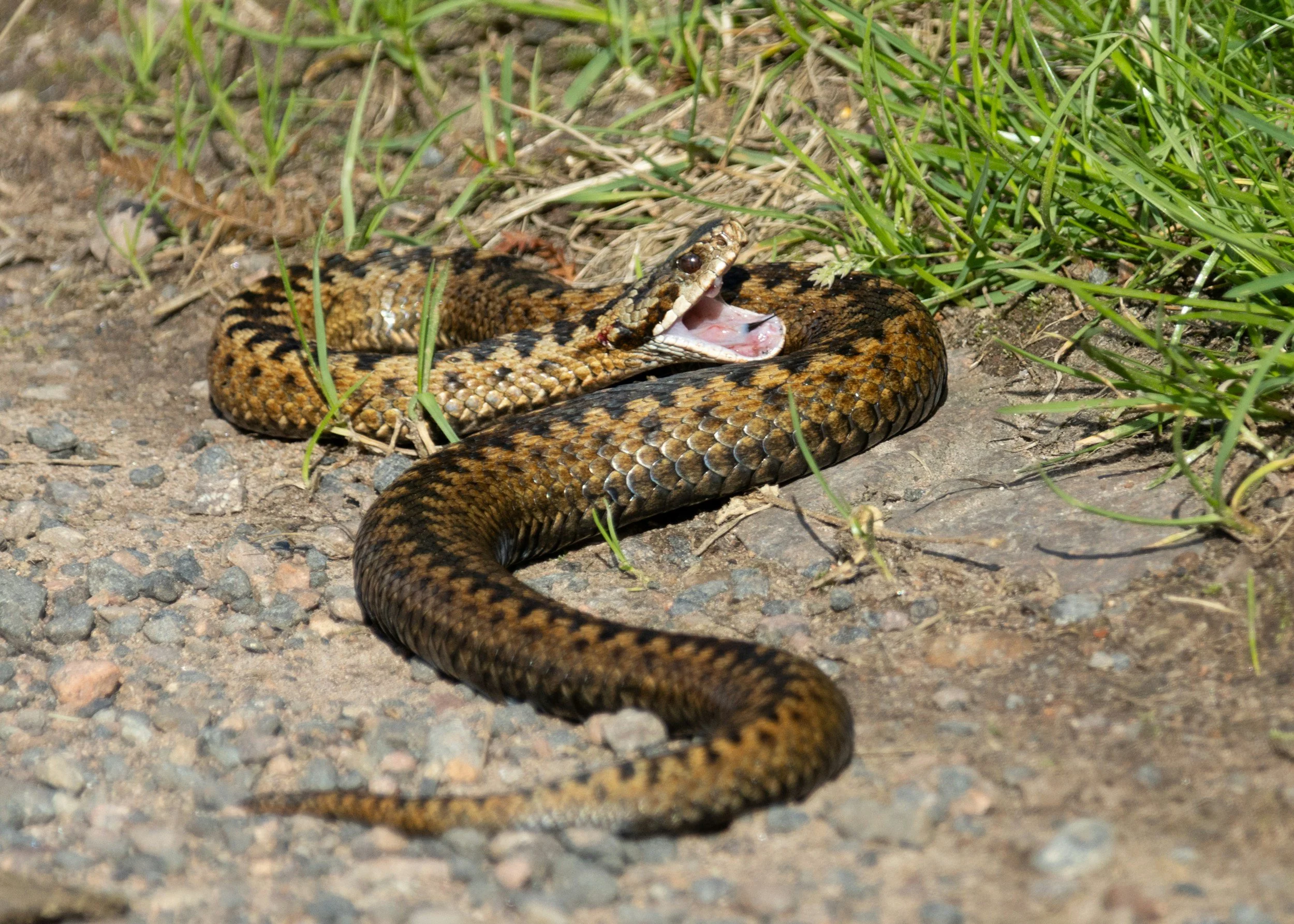
Adders (Vipera berus) are the UK’s only native venomous snake and one of the country’s most recognisable reptiles. Noted for their distinctive zigzag dorsal pattern and stout body, they use well-developed heat-sensing behaviour to bask and regulate body temperature and rely on ambush tactics to capture small mammals, amphibians and reptiles. Adders breed in spring, give birth to live young in late summer, and favour heathland, rough grassland and open woodland edges where dense ground cover provides both shelter and suitable hunting perches.
The adder (Vipera berus) is Britain’s only native venomous snake, occurring across a wide range of habitats including heaths, moorland, grassland, woodland edges, coastal dunes and sunny clearings, with populations generally stronger in England and parts of Wales and Scotland and more fragmented or locally absent in other areas.
Typically secretive and ectothermic, adders use a mosaic of microhabitats - basking sites such as open patches, tussocky grass or sunny rides, alongside adjacent dense cover for shelter and hibernation in mammal burrows, root systems or tussocks - and are most active in spring and autumn when temperatures suit basking and foraging.
Diet consists mainly of small mammals, amphibians and occasionally nestling birds; breeding is viviparous with females giving birth to live young in late summer. An adder survey may be required for development or land‑use change because populations can be legally protected and local declines make them a conservation concern; locating hibernacula, basking and breeding areas and understanding seasonal activity patterns helps inform site design, timing of works and mitigation to avoid disturbance and support conservation outcomes.
When might I need a Reptile Survey?
A reptile survey is required when planned works could disturb reptiles, their shelter or movement routes, which commonly includes any development or land‑use change affecting grassland, heathland, scrub, hedgerow banks, brownfield sites or gardens; activities that involve vegetation clearance, ground excavation, earthworks, soil stripping, demolition, drainage works, or the erection of buildings; and where planning authorities or ecological consultants identify records or suitable habitat within or adjacent to a site. Under UK guidance, protected species considerations (including for smooth snake and sand lizard where applicable) and best‑practice licensing and mitigation apply to prevent harm to reptiles.
The adder (Vipera berus) is widespread in suitable habitat and should be specifically considered during surveys because its presence can affect timing, mitigation and the need for precautionary working methods; surveys are therefore carried out early in the project lifecycle - typically during pre‑application ecological appraisal or prior to demolition and groundworks - to determine presence, refugia locations and whether translocation, habitat management, timing restrictions or further licences and advice from the relevant statutory nature conservation body will be necessary.
Explore other protected species
Learn about other protected species including bats, birds, reptiles and more.