
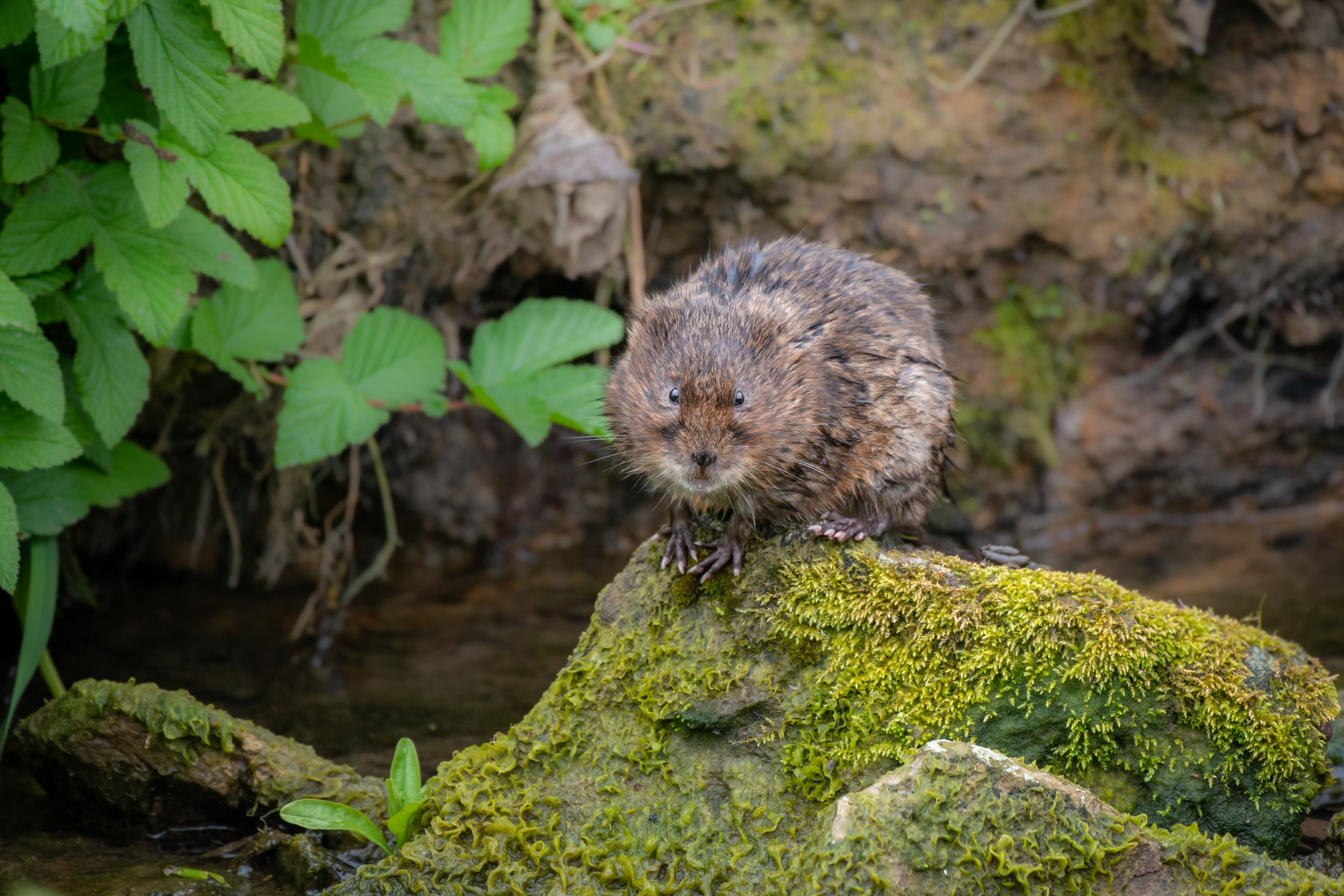
Water Vole
Water vole
Arvicola amphibius
The water vole is a compact rodent with a rounded muzzle, small fur-covered ears and a blunt furry tail; adults are about 12–20 cm long and weigh 120–250 g, with soft brown fur that may be reddish or grey. In the UK it inhabits slow rivers, streams, ditches, ponds and marshes with well-vegetated banks and emergent plants - strongholds include lowland river corridors, wetland reserves, the Welsh Marches, Somerset Levels and parts of Scotland and northern England.
The water vole (Arvicola amphibius) is native to the UK and occurs along slow-moving rivers, ditches, canals, ponds, wet meadows and reedbeds, favouring banks with tall marginal vegetation and soft substrates for burrowing; populations are fragmented nationally, with stronger local populations in well-connected wetland landscapes and declines where habitats are degraded or fragmented. Primarily herbivorous, water voles feed by day on grasses, rushes, reeds and other waterside plants, creating distinctive gnawed stems and latrine sites close to the water’s edge.
A water vole survey may be required for development or land‑use change because they and their burrows are protected under UK law in recognition of steep historical declines; locating burrows, assessing population presence and evaluating habitat quality informs mitigation, timing and design of works, and supports licence applications or conservation measures to avoid legal breaches and reduce impacts on this declining species.

When might I need a Water Vole Survey?
A water vole survey is needed when proposed works could disturb water voles, their burrows or commuting corridors, which commonly includes any development or land‑use change affecting rivers, streams, ditches, canals, ponds, wet grassland, reedbeds or riparian vegetation; activities that involve bank reprofiling, culverting, drainage works, vegetation clearance, infilling, excavation, demolition adjacent to watercourses, or changes to water levels or flow; and where planning authorities or ecological consultants identify records or suitable habitat within or adjacent to a site.
Under UK law water voles are protected from intentional killing, injuring or taking and from damage or destruction of burrows in certain circumstances, so surveys are required early in the project lifecycle - typically during pre‑application ecological appraisal or prior to works affecting waterbodies - to determine presence, burrow locations and population status, and to establish whether mitigation, timing restrictions, enhancement measures or licences (where applicable) will be necessary.
Explore other protected species
Learn about other protected species including bats, birds, reptiles and more.