
Barn Owls
Barn Owls
tyto alba
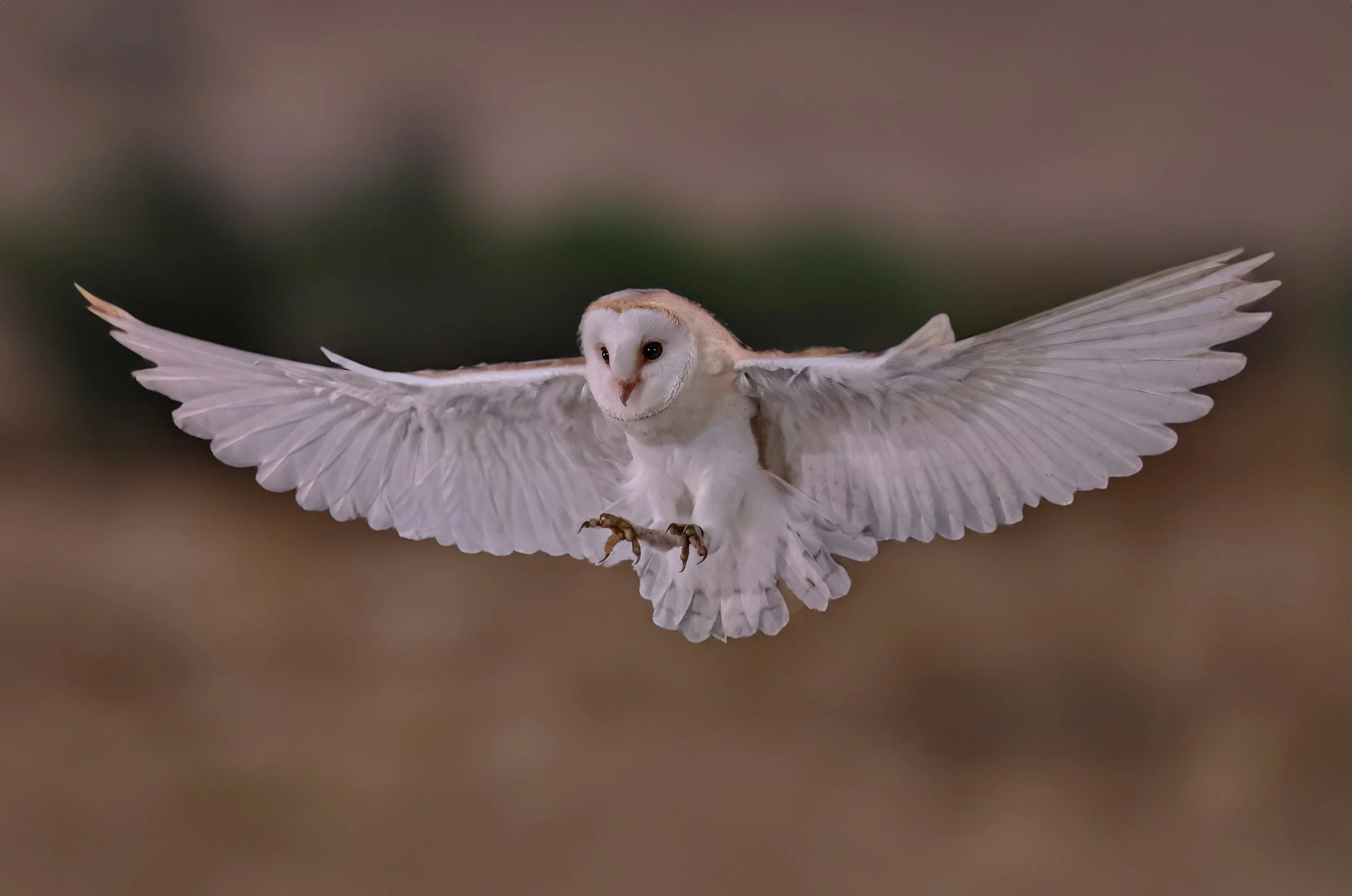
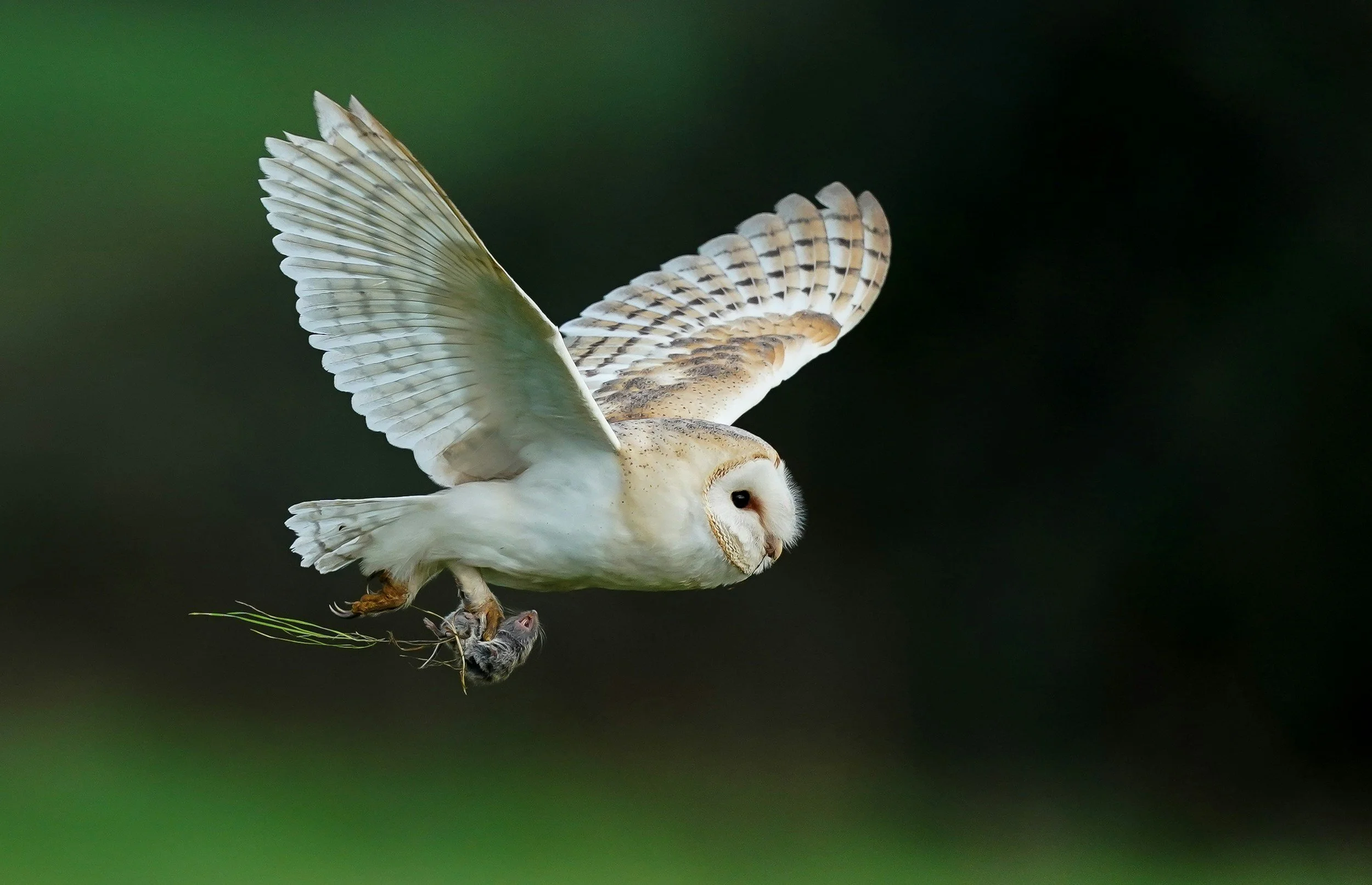
Barn owls in the UK are medium-sized, heart-faced birds with pale, ghostly plumage, golden-buff upperparts and white underparts that make them unmistakable in low light. They hunt mostly at dusk and through the night, gliding low over grassland and hedgerows to listen and locate small mammals, particularly voles and mice, using silent flight and acute hearing to capture prey with swift taloned strikes. Often found in farmland, reedbeds and church towers, they nest in tree cavities, barns or purpose-built boxes and are vulnerable to habitat loss, road collisions and declines in prey abundance.
Barn owls (Tyto alba) are widespread across the UK and are specialist nocturnal predators that use a range of open habitats including farmland, rough pasture, grassland, marshes, hedgerows and the margins of woodland, as well as human-made structures such as barns, farm buildings and church towers for roosting and nesting. They hunt low over vegetation at dawn and dusk, locating small mammals (particularly voles, mice and shrews) by sound and silent flight.
Barn owl territories and populations are sensitive to loss and degradation of foraging habitat, reductions in prey abundance from intensive farming and pesticide use, removal or alteration of nesting and roost sites, and barriers to safe commuting such as busy roads. Many local populations are vulnerable and benefit from habitat management that maintains tussocky grassland, uncultivated margins and hedgerows, and from retention or provision of suitable nest and roost sites (boxes or adapted buildings).
Surveys and assessments are commonly recommended for developments affecting open farmland and buildings because barn owls are a conservation priority; survey results inform mitigation and compensation measures (timing of works, retention/creation of foraging habitat, installation of nest boxes or replacement roosts, and sensitive lighting) to minimise disturbance and avoid impacts on breeding territories.
When might I need a Barn Owl Survey?
A barn owl survey is needed when works might disturb barn owls, their nests, roosts, or key foraging and commuting habitat. This includes most developments or land‑use changes affecting buildings, barns, bridges, silos, attics, roofspaces, barns and outbuildings, agricultural buildings, woodland edges, hedgerows, rough grassland, meadows, riverbanks, ditches, reedbeds or other features that provide hunting habitat or nesting opportunities.
It also covers activities such as demolition, roof work, installing or removing lighting, tree or hedge removal, vegetation clearance, conversion of farm buildings, extensions, major refurbishments, erection of turbines, bridge works, culverting, excavation, changes to drainage or watercourses, and any works that alter prey availability or hunting conditions.
Surveys are particularly important where planners, consultees, ecological records or on‑site signs (pellets, whitewash, sightings or nest material) indicate barn owl presence or when suitable habitat is on or adjacent to a site. Barn owls and their nests are protected under UK wildlife legislation from intentional killing, injuring, disturbance at nest sites, or destruction of occupied nests.
Surveys should therefore be undertaken early - typically during the preliminary ecological appraisal or before any works that could affect nesting, roosting, flight lines or foraging habitat - to detect presence, locate nest/roost sites and assess their status. The findings indicate whether mitigation, timing constraints, retention or provision of nesting features, habitat management, enhancement measures or a licence (where required) are necessary.
Explore other protected species
Learn about other protected species including bats, birds, reptiles and more.