
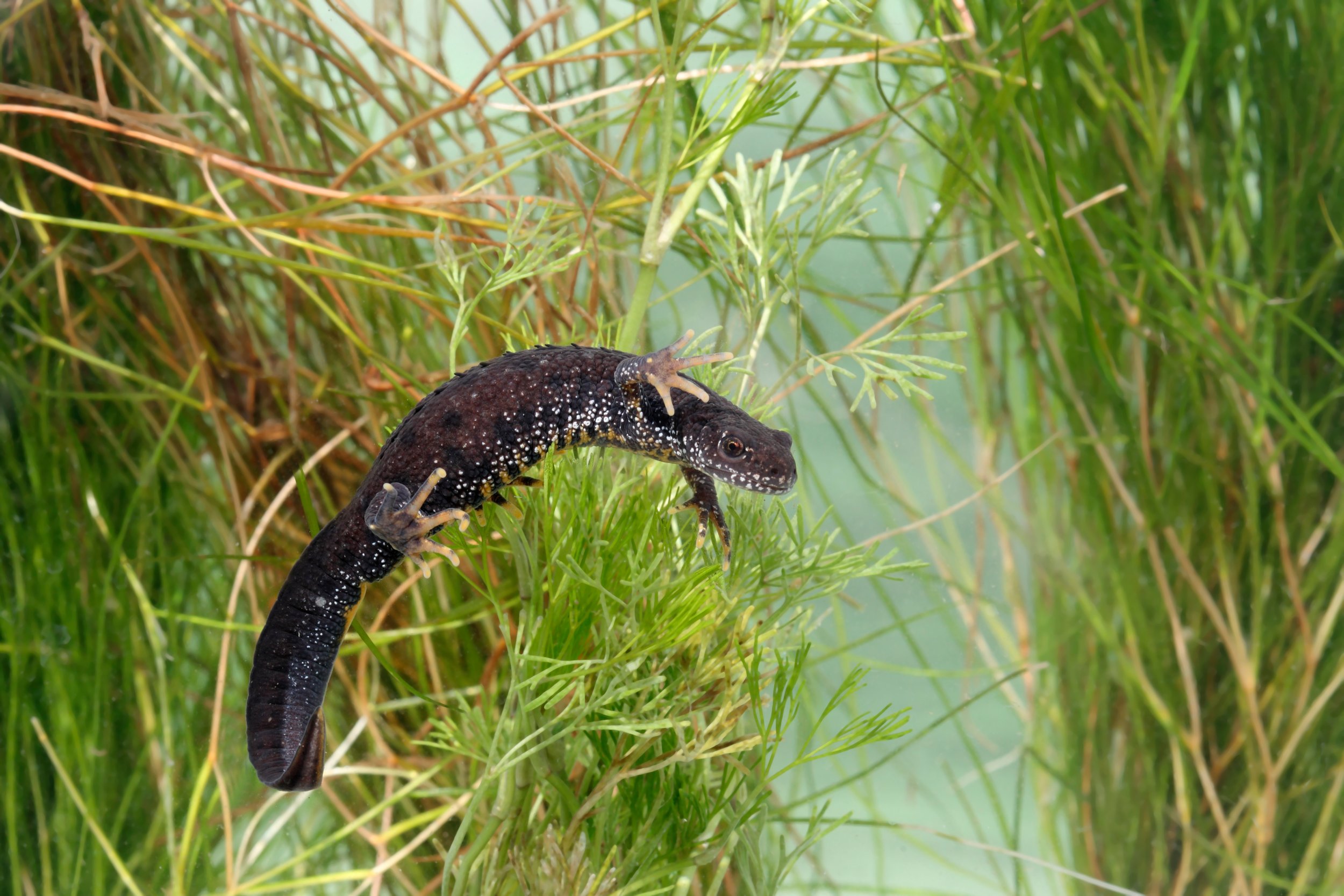
Great Crested Newt
Great Crested Newts
Triturus cristatus
Great crested newts are medium-sized amphibians with warty, dark-brown to black dorsal skin and a striking orange to yellow belly patterned with bold black spots; males develop a jagged, sail-like crest along the back and tail in spring, making them distinctive during the breeding season. They breed in ponds and other still waters, where males perform elaborate courtship displays and tadpoles develop before metamorphosis; outside the breeding season they forage terrestrially in hedgerows, grassland and woodland, using damp refuges such as logs, brash and mammal burrows.
Great crested newts (Triturus cristatus) are a protected amphibian species in the UK found in and around ponds, ditches and other freshwater bodies, and use adjacent terrestrial habitats such as grassland, rough pasture, hedgerows, scrub and woodland for foraging and shelter. They breed in ponds in spring and early summer, with adults and juveniles spending the remainder of the year in terrestrial refugia—such as hedgerows, log piles, mammal burrows and dense vegetation—often within several hundred metres of their breeding pond. Great crested newt populations are sensitive to loss, fragmentation and degradation of both aquatic and terrestrial habitat, reductions in water quality and pond loss, and barriers to dispersal such as roads and impermeable urban development. Local populations benefit from pond creation and restoration, maintenance of pond networks and connective habitat, retention of terrestrial refuges and uncultivated margins, and measures to maintain good water quality. Surveys and ecological assessments are commonly required for developments affecting ponds and surrounding land because great crested newts are European Protected Species; survey results inform mitigation and licensing measures (timing and method of works, retention/creation of ponds and terrestrial habitat, provision of refuge features and safe translocation or exclusion under licence) to minimise disturbance and avoid impacts on populations.
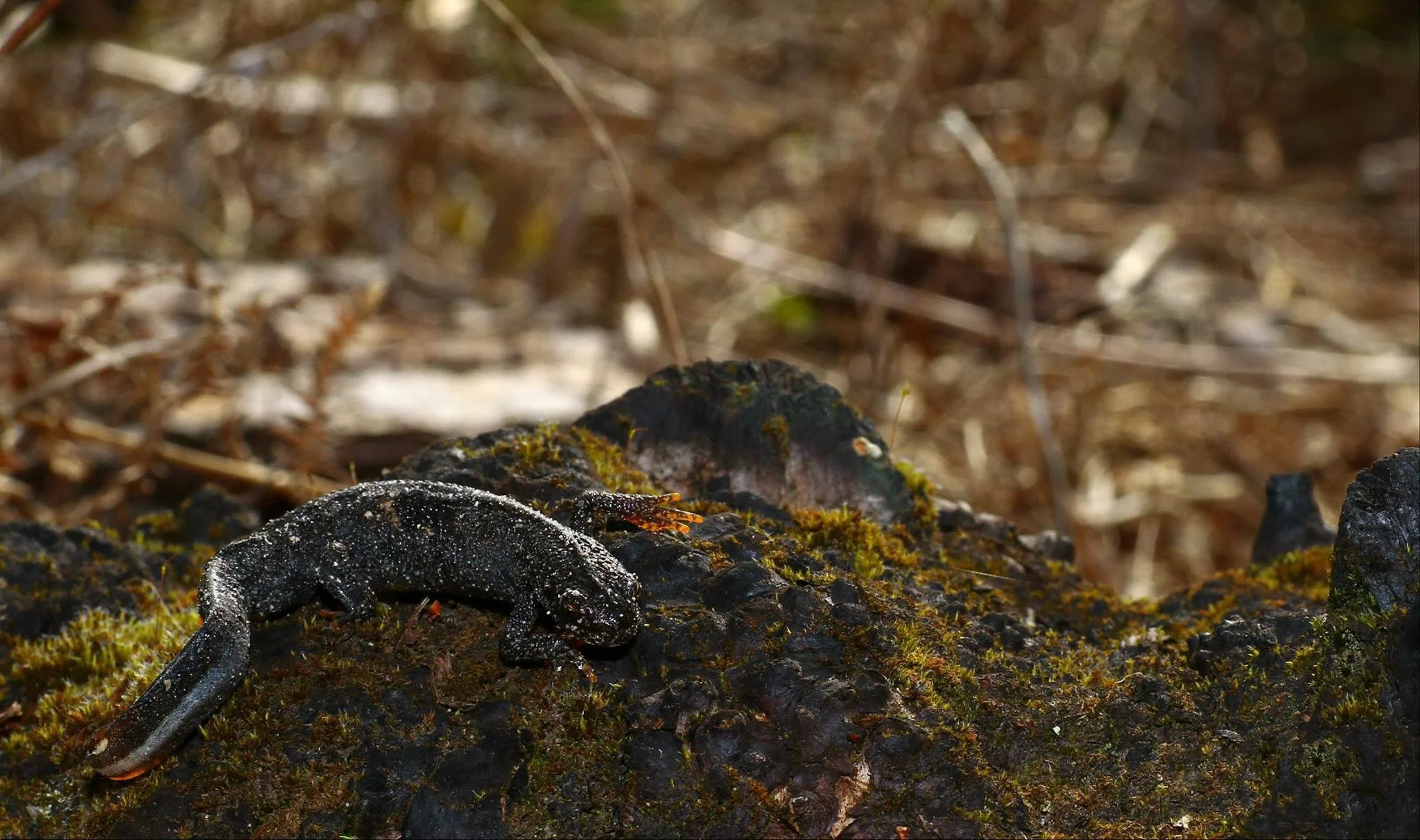
When might I need a Great Crested Newt Survey?
A great crested newt survey is needed when works might disturb great crested newts, their ponds, terrestrial habitats, hibernation sites or dispersal routes. This includes developments or land‑use changes affecting ponds, waterbodies, ditches, ponds in gardens, farm ponds, ponds within woodland, marsh, scrub, rough grassland, hedgerows, arable field margins, earthworks, banks, rubble piles, stone walls, cellars, basal gaps in buildings and other refugia used for shelter or hibernation. It also covers activities such as pond infilling or creation, watercourse diversion, drainage changes, excavation, construction, demolition, removal of vegetation or scrub, installation of lighting, soil stripping, gravel extraction, track or access construction, and any works that alter pond quality, hydrology or connectivity.
Surveys are particularly important where planning records, ecological data, historic records, on‑site signs (adults, larvae, egg‑laying on pond vegetation) or nearby suitable ponds indicate potential presence. Great crested newts and their resting places are protected under UK wildlife legislation from deliberate capture, injury, killing, damage to places of shelter or disturbance. Surveys should therefore be carried out early - typically as part of the preliminary ecological appraisal or before any works that could affect aquatic or terrestrial habitat - to confirm presence, identify breeding ponds and terrestrial refugia and assess population status. Results determine whether mitigation, timing constraints, retention or creation of ponds and terrestrial habitat, translocation, habitat management, enhancement measures or a protected species licence (where required) are necessary.
Explore other protected species
Learn about other protected species including bats, birds, reptiles and more.